
Economic Solvency Visa 2026
Requirements, Investment Amounts and Permanent Residency
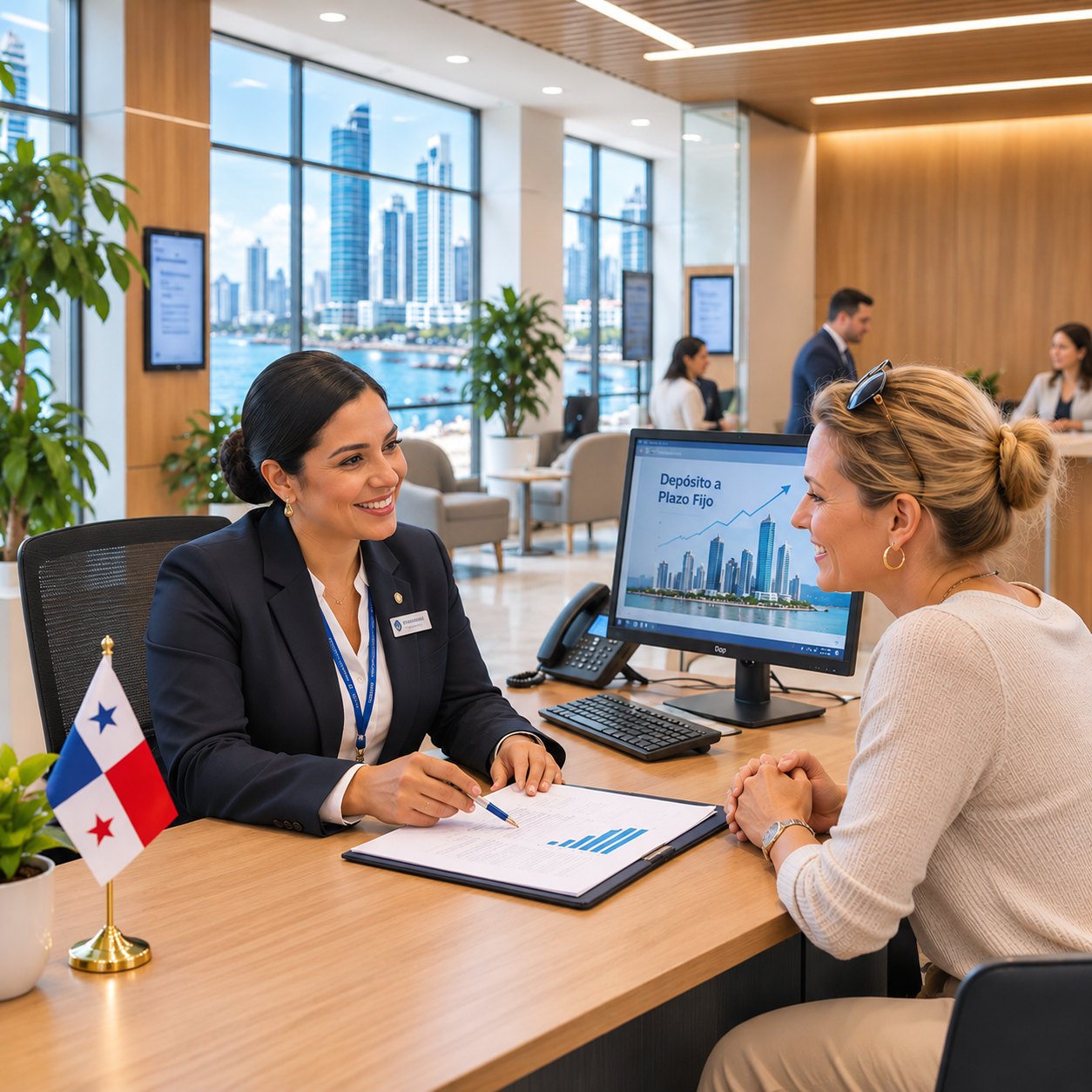
Panama offers several immigration options for foreign nationals who want to live, invest or establish themselves in the country. One of these options is Residency Through Personal Economic Solvency, a category designed for individuals with sufficient financial resources who wish to demonstrate their economic capacity through a real estate investment, a fixed-term bank deposit, or a combination of both.
This residency option may be suitable for foreigners who want to purchase a house or apartment in Panama, keep part of their capital in a local bank or relocate to the country without relying on a Panamanian employment contract.
The minimum investment requirement is B/.300,000, and applicants must demonstrate that the funds originate from abroad. Eligible family dependents may also be included, subject to the applicable requirements.
It is important to distinguish this category from the Panama Qualified Investor Visa. Although both involve investments in Panama, they have different requirements, procedures and immigration stages. Personal Economic Solvency Residency is primarily regulated by Articles 191, 192 and 193 of Executive Decree No. 320 of 2008, which implements Decree-Law No. 3 of 2008 and its amendments.
This guide explains the available investment options, required documents, investment conditions and steps involved in applying for residency in Panama.
1. What Is Panama Residency Through Personal Economic Solvency?
Personal Economic Solvency Residency is an immigration category that allows a foreign national to apply for residency in Panama by demonstrating sufficient personal financial resources and making a qualifying investment of at least B/.300,000 in the country.
The investment can be made in three ways:
By purchasing one or more properties in Panama.
By opening a fixed-term deposit with a Panamanian bank.
By combining a real estate investment and a fixed-term bank deposit.
Under all three options, the applicant must demonstrate that the funds originated abroad and meet the applicable legal requirements regarding ownership and documentation.
This residency category is not restricted to a specific nationality and does not require the applicant to be retired or receive a pension. Its main requirement is financial solvency supported by a qualifying investment in Panama.
2. How Much Do You Need to Invest?
The minimum investment requirement for this residency category is B/.300,000, equivalent to USD 300,000.
Applicants may choose the investment option that best suits their financial plans.
Option 1. Residency Through Real Estate Investment
Foreign nationals may qualify by purchasing property in Panama with a minimum value of B/.300,000.
Eligible property types may include:
Residential houses.
Apartments.
Commercial properties.
Other real estate assets that meet the applicable legal requirements.
The property must be registered in the Panamanian Public Registry under the applicant’s name and meet the applicable ownership and valuation requirements.
The Public Registry certification must establish ownership and confirm that the property is free of liens.
Before purchasing, it is advisable to review the property deed, ownership history, mortgages, attachments and any other restrictions that could affect the property.
The regulation also recognizes certain cases in which property may be registered under a private interest foundation, provided the foreign national proves they are the founder and that they or their dependents are the beneficiaries, subject to the applicable legal conditions.
There is also a provision for certain cases in which the applicant has paid B/.300,000 for a property whose value is higher. The remaining balance may be financed through a mortgage loan from a local bank, subject to the applicable requirements.
Option 2. Residency Through a Fixed-Term Bank Deposit
Another option is to open a fixed-term deposit of at least B/.300,000 with a bank holding a general banking license in Panama.
For this option, the deposit must:
Be held in the applicant’s name.
Have a minimum term of three years.
Be free of liens.
Meet the applicable banking and immigration requirements.
Be supported by documentation proving the foreign origin of the funds.
The bank must issue a certification confirming the opening of the deposit, its ownership, amount and contractual term. An authenticated copy of the fixed-term deposit certificate must also be submitted.
This option may be suitable for applicants who prefer to keep their capital in the Panamanian banking system rather than purchase real estate.
Before opening the deposit, applicants should ask the bank about early withdrawal conditions, renewal terms, interest rates and access to the funds. A banking decision may affect compliance with the immigration requirements.
Option 3. Residency Through a Combination of Real Estate and Bank Deposit
The third option allows applicants to combine a real estate investment with a fixed-term bank deposit.
For example:
Real estate investment: B/.200,000.
Fixed-term bank deposit: B/.100,000.
Total investment: B/.300,000.
Other combinations may be used, provided the total reaches the required minimum.
Under this option, applicants must submit both the property documentation and the relevant bank certifications.
Both components must meet the applicable legal requirements, and ownership and the foreign origin of the funds must be properly documented.
3. Can You Include Your Family in the Application?
Yes. The regulations allow eligible dependents to be included, provided the applicant proves the family relationship and meets the applicable family reunification requirements.
An additional financial solvency amount of B/.2,000 must be demonstrated for each dependent.
Depending on the applicable legal conditions, eligible family members may include:
Spouse.
Minor children.
Adult children who meet the dependency requirements.
Dependent parents, where applicable.
Supporting documents may include marriage or birth certificates, a letter of responsibility, proof of address and evidence of financial dependency.
Additional documents may be required for adult children, such as a certificate of single status and proof of enrollment in an educational institution.
Each dependent’s eligibility should be reviewed individually before the application is submitted.
4. Requirements and Documents for the Application
The application file must include personal, immigration and financial documents. Specific requirements may vary depending on whether the investment is made through real estate, a bank deposit or a combination of both.
A. Applicant’s personal documents
The general documentation usually includes:
Formal application and power of attorney filed through a lawyer.
Complete copy of the passport, duly certified or authenticated as required.
Criminal record certificate from the applicant’s country of origin or residence, duly apostilled or legalized when applicable.
Health certificate issued in Panama by a qualified physician.
Recent passport-size photographs.
Sworn statement of personal background.
Any additional documentation requested by the National Immigration Service.
Foreign-issued documents must meet the applicable apostille or authentication requirements. Documents written in another language may need to be translated into Spanish by an authorized public translator.
B. Documents for a real estate investment
If the application is based on purchasing property, the following documents may be required:
Public Registry certification establishing ownership of the property.
Documentation proving that the property meets the minimum value of B/.300,000.
Evidence that the property meets the applicable conditions and is free of liens.
Documents demonstrating the foreign origin of the investment funds.
Public deed and other acquisition documents, where required.
If the property is registered under a private interest foundation, documents proving the applicant’s status as founder and beneficiary, or the beneficiary status of their dependents, must be submitted in accordance with the regulations.
C. Documents for a fixed-term bank deposit
If the investment is made through a bank deposit, the applicant must submit:
Bank certification confirming the opening of the deposit in the applicant’s name.
Minimum deposit amount of B/.300,000.
Minimum term of three years.
Confirmation that the deposit is free of liens.
Copy of the deposit certificate authenticated by the bank.
Banking documentation establishing the foreign origin of the funds.
D. Documents for a mixed investment
When combining real estate and a fixed-term deposit, the applicant must submit the documents required for both investment options.
The combined investment must reach at least B/.300,000 and meet the applicable ownership and lien-free requirements.
5. How Do You Prove That the Funds Come from Abroad?
This is one of the most important aspects of the application.
It is not enough to demonstrate that you own property or have a bank deposit worth B/.300,000. Applicants must also prove that the funds used to make the investment originated abroad.
Supporting documents may include:
Bank statements from the applicant’s country of origin.
International wire transfer receipts.
Certifications issued by foreign banks.
Certifications from the Panamanian bank that received the funds.
Proof of payment to the seller or financial institution.
Other documents that establish the movement and source of the funds.
Applicants should keep all supporting documentation from the initial transfer until the property purchase or bank deposit is completed.
The source of funds must be clear, consistent and verifiable.
6. How Long Does the Initial Permit Last, and When Can You Apply for Permanent Residency?
This immigration category includes an initial provisional residency period of two years. Once that period has elapsed, the foreign national may apply for permanent residency, provided the investment requirements are maintained and the applicable conditions are met.
The requirements published by the National Immigration Service for this category describe an initial two-year permit followed by an application for permanent residency.
For the permanent residency stage, the applicant must submit the relevant investment documentation and applicable supporting documents again. The published immigration checklist indicates that the criminal record certificate and the initial government payments listed for the provisional application are not required for this second stage.
Applicants should prepare for the second stage in advance and should not assume that permanent residency is granted automatically after completing the two-year period.
7. How Much Does Personal Economic Solvency Residency Cost?
The costs associated with this immigration category may include:
Immigration application fees.
Repatriation deposit.
Legal fees.
Notarial expenses.
Apostilles and document authentication.
Authorized public translations.
Bank and Public Registry certifications.
Expenses related to purchasing property or opening the fixed-term deposit.
A requirements checklist published by the National Immigration Service for the fixed-term deposit option lists initial payments of B/.250 to the National Treasury and B/.800 to the National Immigration Service. Since government fees and administrative procedures may change, these amounts should be confirmed with the authorities before issuing checks or filing the application.
These payments are separate from the minimum B/.300,000 investment and professional legal fees.
8. How Long Does the Application Process Take?
Processing time depends on the investment option, document preparation and the review conducted by the National Immigration Service.
For example, a real estate purchase may require additional time to prepare the deed, complete payments and obtain registration in the Public Registry. A bank deposit requires completion of the account-opening, transfer and certification procedures.
The official service information reviewed does not publish a single processing period that guarantees approval for every application. Applicants should therefore organize their documents in advance and allow additional time for apostilles, translations, certifications and possible requests for corrections or additional information.
9. Benefits of Panama Personal Economic Solvency Residency
This immigration category may offer several advantages to foreign nationals who wish to establish themselves in Panama.
It is not restricted to specific nationalities
The category is not limited to a list of eligible countries. Foreign nationals who meet the financial and immigration requirements may consider this option.
A pension is not required
Unlike the Panama Pensionado Visa, applicants do not need to demonstrate a lifetime pension. The main requirement is the qualifying investment and financial solvency.
It allows investment in real estate
Applicants may use a qualifying property purchase as the basis for their residency application. This can be attractive to individuals who wish to acquire a home for personal or family use.
It offers a banking alternative
Applicants who prefer not to purchase property may consider opening a fixed-term deposit with a Panamanian bank.
It allows two types of investment to be combined
The mixed investment option offers flexibility by allowing applicants to divide their capital between real estate and a bank deposit.
Eligible family members may be included
The applicant may include dependents, provided the required family relationships and additional financial solvency are documented.
It offers a path to long-term residence in Panama
After completing the initial period and meeting the applicable requirements, the foreign national may apply for permanent residency.
10. Does Personal Economic Solvency Residency Allow You to Work in Panama?
Immigration residency and work authorization are separate legal matters.
Obtaining this residency should not be interpreted as automatic authorization to perform any employment or professional activity in Panama.
Foreign nationals who wish to work for a Panamanian company, provide paid services or practice a profession should review whether a work permit or other specific authorization is required.
Regulated professions and occupations reserved for Panamanian citizens may be subject to additional restrictions.
11. Tax Considerations for Foreign Residents
Immigration residency does not automatically make an individual a Panamanian tax resident.
Panama generally applies a territorial tax system. Tax treatment depends on where income is generated and the nature of each activity.
Before relocating or investing, applicants should review:
Taxes associated with purchasing property.
Tax obligations arising from rental income.
Taxes that may apply to a future property sale.
Tax obligations that may remain in the applicant’s home country.
Whether property should be held personally or through a legal entity.
Tax implications of maintaining bank deposits and investments in Panama.
U.S. citizens and tax residents of other countries may continue to have reporting obligations in their home jurisdictions after relocating to Panama. It is therefore advisable to coordinate tax planning with professionals familiar with the laws of both countries.
12. Legal Recommendations Before Purchasing Property
If you intend to use a property to apply for this residency, it is important to review the transaction before transferring money or signing an agreement.
Some key recommendations include:
Verify the registered owner through the Public Registry.
Confirm that the property has sufficient value to meet the requirement.
Review mortgages, attachments, liens and restrictions.
Verify cadastral information and the property’s status with ANATI.
Ensure that payments are made through documented banking transactions.
Review the promise of sale agreement and public deed.
Confirm that the funds originate abroad.
Review the taxes associated with the purchase.
Avoid paying substantial deposits without legal review of the contract.
Keep all transaction documents and payment records.
A real estate purchase should protect both the buyer’s assets and the viability of the immigration application.
13. Difference Between Personal Economic Solvency Residency and the Qualified Investor Visa
Although both categories require an investment, they are not the same immigration permit.
| Feature | Personal Economic Solvency | Qualified Investor |
|---|---|---|
| Reference minimum investment | B/.300,000 | Depends on the investment option, starting at B/.300,000 |
| Investment options | Real estate, fixed-term deposit or a combination | Real estate, securities and bank deposits |
| Authority reviewing the investment | National Immigration Service | MICI and National Immigration Service |
| Initial permit | Two years, followed by an application for permanent residency | Direct permanent residency if requirements are met |
| Bank deposit term | Minimum three years | Five years |
| Foreign source of funds | Required | Required |
The best option should be selected after reviewing the type of investment, available capital, intended holding period and the applicant’s personal and family objectives.
14. Frequently Asked Questions About Personal Economic Solvency Residency
What is the minimum investment required?
The minimum investment is B/.300,000 through real estate, a fixed-term bank deposit or a combination of both.
Can I apply by purchasing a house in Panama?
Yes. You may use a property that meets the minimum value and registration requirements for this immigration category.
Can I apply using only money deposited in a bank?
Yes. You may open a fixed-term deposit of at least B/.300,000 with a bank holding a general banking license in Panama. The deposit must have a minimum term of three years and remain free of liens.
Can I combine a property purchase with a bank deposit?
Yes. The mixed investment option allows you to combine both types of investment to reach the required minimum.
Do I have to prove that my funds come from abroad?
Yes. The foreign origin of the funds is a fundamental requirement of this immigration category.
Can I include my spouse and children?
Yes, provided they meet the applicable dependency and documentation requirements. Additional financial solvency of B/.2,000 must be demonstrated for each dependent.
When can I apply for permanent residency?
After completing the initial two-year provisional residency period, you may apply for permanent residency if you continue to meet the applicable requirements.
Do I need to receive a pension to qualify?
No. This category is based on financial solvency and investment, not on receiving a lifetime pension.
Can I work in Panama with this residency?
Residency alone should not be considered automatic work authorization. The applicable labor regulations must be reviewed according to the intended activity.
Is this the same as the Qualified Investor Visa?
No. They are separate immigration categories with different requirements and procedures. It is important to compare both before making an investment.
15. Legal Assistance for Personal Economic Solvency Residency in Panama
Investing in another country and planning an international relocation require careful preparation. Before purchasing property, opening a bank deposit or filing an immigration application, it is advisable to verify that each step complies with Panamanian law.
Julisa Jaramillo – Attorney at Law in Panama provides bilingual legal consultations in English and Spanish for foreign nationals interested in establishing residency in Panama through Personal Economic Solvency.
Services may include:
Initial eligibility assessment.
Guidance on the available investment options.
Review of properties and purchase agreements.
Review of public deeds and Public Registry certifications.
Coordination of banking documentation and proof of the source of funds.
Preparation and review of immigration documents.
Coordination of apostilles and authorized public translations.
Representation before the National Immigration Service.
Follow-up on provisional and permanent residency applications.
Guidance on documentation for family dependents.
If you are considering purchasing property, making a bank deposit or relocating to Panama, you may request a consultation to evaluate which immigration option best suits your needs.
Contact Julisa Jaramillo for bilingual legal guidance on the requirements and process for obtaining residency in Panama.
Website: https://julisajaramillo.com/
This article is intended for general informational purposes and does not constitute legal, financial or tax advice. Requirements and procedures should be confirmed with the National Immigration Service when filing the application. Approval depends on the competent authorities’ review of each individual case.
